Spot fall hazards before the job starts and understand how they can be controlled.
What you will learn
Recognise tasks where people or objects could fall, including work on vehicles and fragile surfaces.
Use a risk assessment to identify who could be harmed and what controls are needed.
Compare avoiding work at height, preventing falls and reducing their consequences.
Recognise the uses and limitations of ladders, mobile towers and mobile elevating work platforms.
Understand why equipment checks and a site-specific rescue plan are needed.
Who needs it
Construction workers, facilities technicians, roof maintenance teams, fit-out crews and industrial contractors whose work can expose them to falls.
Local law
Online awareness does not replace site-specific or practical training, a practical competency assessment, equipment-specific instruction or site rescue drills.
The online course plus a short video of fitting and checking a safety harness, reviewed by our QQI Level 6 (Ireland) and City & Guilds (UK) certified instructors.
What you will learn
Recognise tasks where people or objects could fall, including work on vehicles and fragile surfaces.
Use a risk assessment to identify who could be harmed and what controls are needed.
Compare avoiding work at height, preventing falls and reducing their consequences.
Recognise the uses and limitations of ladders, mobile towers and mobile elevating work platforms.
Understand why equipment checks and a site-specific rescue plan are needed.
Practical assessment
After the final test, record a short video of putting on, adjusting and checking a safety harness and upload it in your account.
Our certified instructors review the video online: QQI Level 6 Certified Instructor (Ireland) and City & Guilds Certified Instructor (UK).
Once the video is approved, the certificate shows a practical assessment badge.
This is awareness training with a practical video check, not a full multi-day practical training course. Our instructors: QQI Level 6 Certified Instructor (Ireland) · City & Guilds Certified Instructor (UK).
Who needs it
Construction workers, facilities technicians, roof maintenance teams, fit-out crews and industrial contractors whose work can expose them to falls.
Local law
Online awareness does not replace site-specific or practical training, a practical competency assessment, equipment-specific instruction or site rescue drills.
Duration: 1 h 30 min + practical videoCertificate valid 3 years
Help your team spot a risky lift before they pick up the load.
What you will learn
Identify handling tasks that can strain the back, including repetitive lifting, carrying, pushing and pulling.
Recognise how force, repetition and awkward postures contribute to injury.
Assess the task, individual, load and working environment before moving anything.
Plan a lift, find a stable position, get a firm grip and keep the load close.
Recognise when to use a handling aid or organise a team lift.
Who needs it
Warehouse pickers, hotel housekeeping staff, delivery crews, construction labourers and facilities teams who move loads by hand.
Local law
Online awareness covers handling principles. Employers still need to assess actual loads and tasks and provide site-specific instruction and practical coaching where needed.
The online course plus a short practical lifting video, reviewed by our QQI Level 6 (Ireland) and City & Guilds (UK) certified instructors.
What you will learn
Identify handling tasks that can strain the back, including repetitive lifting, carrying, pushing and pulling.
Recognise how force, repetition and awkward postures contribute to injury.
Assess the task, individual, load and working environment before moving anything.
Plan a lift, find a stable position, get a firm grip and keep the load close.
Recognise when to use a handling aid or organise a team lift.
Practical assessment
After the final test, record a short video of a safe lift on a phone and upload it in your account.
Our certified instructors review the video online: QQI Level 6 Certified Instructor (Ireland) and City & Guilds Certified Instructor (UK).
Once the video is approved, the certificate shows a practical assessment badge.
This is awareness training with a practical video check, not a full multi-day practical training course. Our instructors: QQI Level 6 Certified Instructor (Ireland) · City & Guilds Certified Instructor (UK).
Who needs it
Warehouse pickers, hotel housekeeping staff, delivery crews, construction labourers and facilities teams who move loads by hand.
Local law
Online awareness covers handling principles. Employers still need to assess actual loads and tasks and provide site-specific instruction and practical coaching where needed.
Duration: 30–40 min + practical videoCertificate valid 3 years
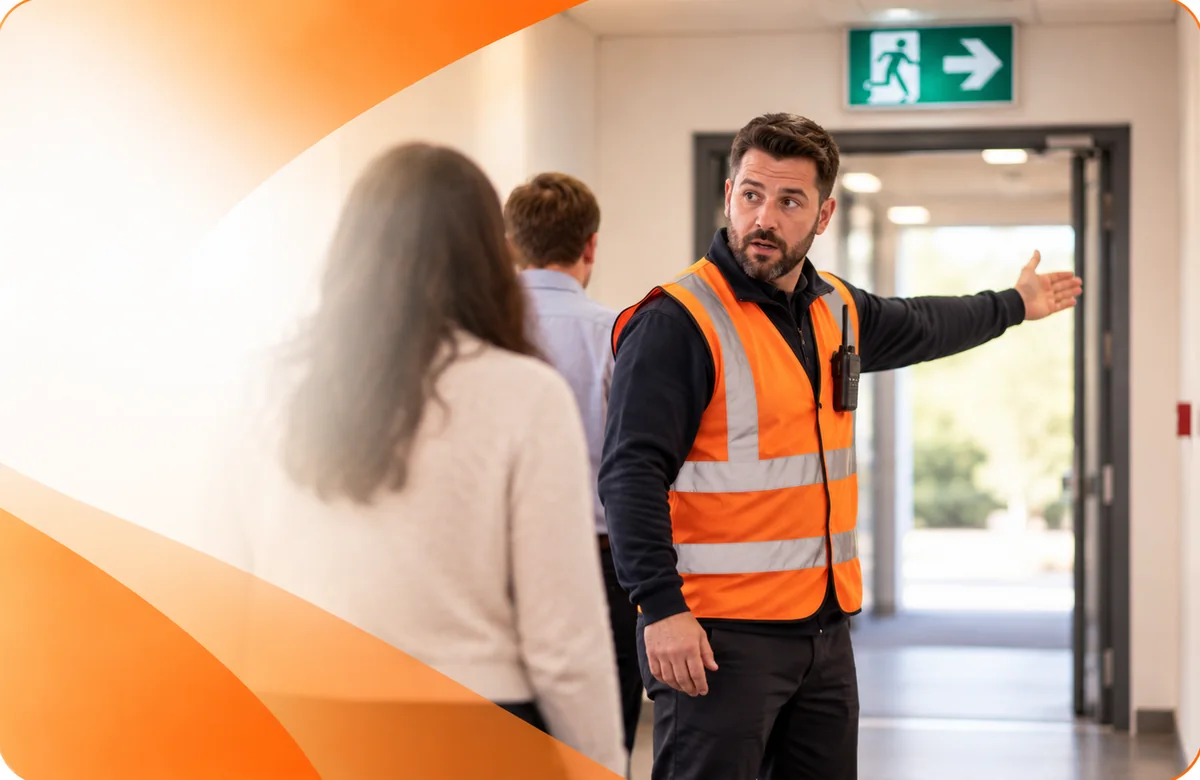
Give nominated wardens a clear picture of their role before the next evacuation drill.
What you will learn
Identify common ignition and fuel sources and understand how fire and smoke spread.
Recognise everyday fire precautions and the warden’s role in spotting problems.
Understand how fire risk assessments inform local emergency arrangements.
Recognise warden responsibilities during an alarm, evacuation and assembly.
Explain how drills and evacuation plans can account for people who need assistance.
Who needs it
Nominated wardens and deputies, plus facilities, office, warehouse and hospitality staff who support workplace evacuations.
Local law
Online awareness supports your building’s emergency arrangements. Employers still need to provide a site briefing, conduct drills and meet applicable Civil Defence and client requirements.
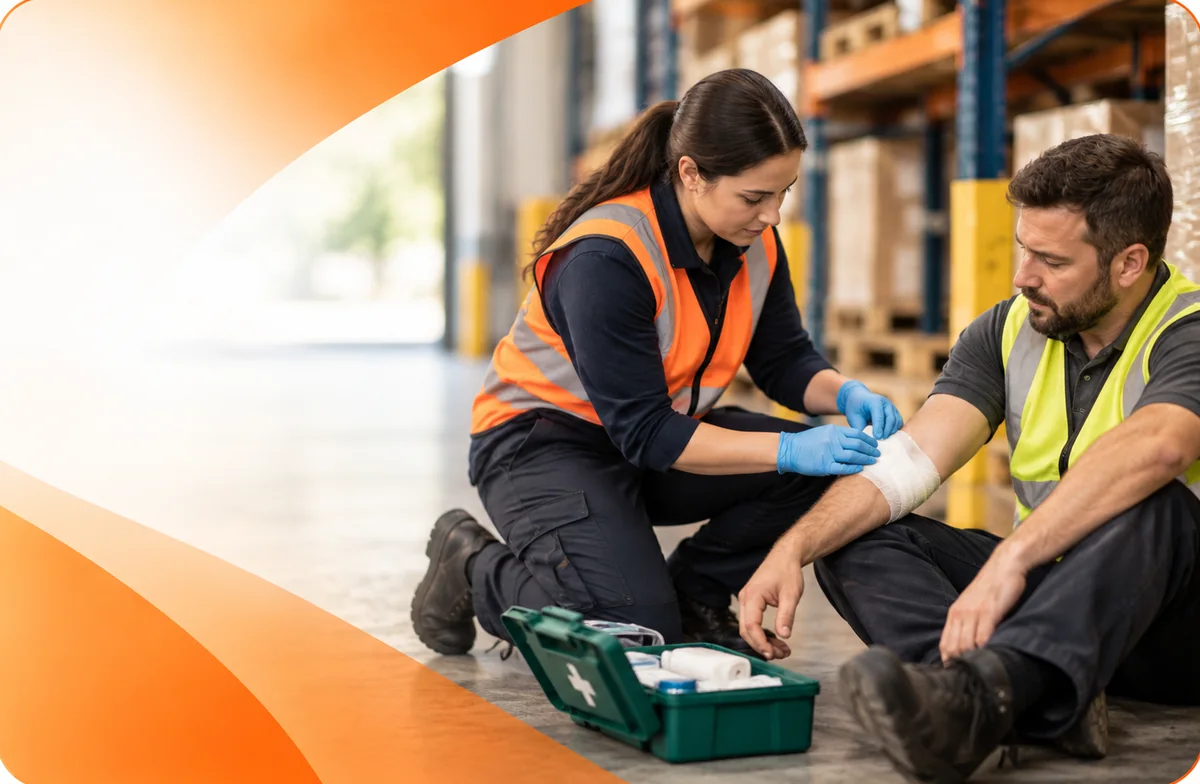
Give staff a basic understanding of workplace emergencies and how to call for help.
What you will learn
Understand scene safety, the primary survey and how to summon emergency help.
Recognise common emergencies, including choking, severe bleeding and shock.
Identify signs that may accompany burns, fractures and head injuries.
Understand the purpose of CPR and an automated external defibrillator (AED).
Recognise signs of asthma attacks, severe allergic reactions, seizures and stroke.
Who needs it
Staff in offices, hotels, warehouses, construction and facilities who need background knowledge of how to respond to an injury or sudden illness.
Local law
Online awareness does not replace practical or site-specific training, assessed CPR or AED skills, or the training required for an appointed workplace first aider.
Recognise a confined space before anyone enters and understand what a safe system must address.
What you will learn
Identify potential confined spaces and explain how the task can change the risks.
Recognise hazardous atmospheres, oxygen deficiency, engulfment and restricted escape.
Consider how to avoid entry and understand the role of isolation and atmosphere checks.
Explain why formal entry controls, communication and an attendant matter.
Recognise what an emergency and rescue plan needs to address before entry.
Who needs it
Utilities, tank maintenance, water treatment, facilities and oil and gas contractor teams whose roles may involve work near tanks, pits or enclosed plant.
Local law
Online awareness does not replace practical or site-specific training, competency assessment, formal entry controls or practical rescue exercises. Site authorisation is required for assigned entry or rescue roles.
Help site teams coordinate vehicle movements and keep pedestrians clear.
What you will learn
Identify where vehicles and mobile plant create risks, including loading bays and temporary routes.
Explain how one-way routes, pedestrian separation and exclusion zones reduce reversing risks.
Recognise safe positioning, blind spots and the limits of reversing aids.
Agree clear hand signals or radio instructions before a manoeuvre.
Recognise when to stop a manoeuvre if a signal is missed or contact is lost.
Who needs it
Logistics yard staff, delivery marshals, construction traffic teams and depot supervisors who work around moving vehicles.
Local law
Online awareness does not replace practical or site-specific training, assessment or employer authorisation for vehicle marshalling. Crane signalling is a separate role.
Build a shared understanding of food hygiene from delivery to service.
What you will learn
Identify food safety hazards and understand how cross-contamination occurs in kitchens.
Recognise allergen risks and ways to prevent allergen cross-contact.
Check deliveries and understand stock rotation, safe storage and traceability.
Explain how cooking, cooling, reheating and holding controls help keep food safe.
Recognise good practice for hand hygiene, cleaning and preventing pests.
Who needs it
Cooks, kitchen assistants, catering staff, banquet teams and food service supervisors in hotels, restaurants and central kitchens.
Local law
This is general catering food safety awareness. It does not replace Dubai Municipality Person in Charge (PIC) training, Abu Dhabi ADAFSA Essential Food Safety Training (EFST) or the Qatar MoPH food handler licence. Apply locally required limits and workplace procedures.
Help food teams understand the purpose of the checks they carry out each day.
What you will learn
Distinguish microbial, chemical, physical and allergen hazards.
Explain how prerequisite programmes support a HACCP system.
Follow the steps from describing a product to confirming a process flow diagram.
Understand how hazard analysis leads to critical control points and critical limits.
Recognise the roles of monitoring, corrective action, verification and record keeping.
Who needs it
Food handlers, line leads, catering supervisors and staff joining a food safety or HACCP team in retail, food service or manufacturing.
Local law
This is general HACCP awareness. It does not replace Dubai Municipality Person in Charge (PIC) training, Abu Dhabi ADAFSA Essential Food Safety Training (EFST) or the Qatar MoPH food handler licence. It does not certify a food safety system or validate a facility’s controls.
Working at Height, Banksman, Confined Spaces and First Aid are awareness courses. They do not replace practical or site-specific training.
Food safety and HACCP awareness do not replace Dubai Municipality Person in Charge (PIC) training, ADAFSA Essential Food Safety Training (EFST) or Qatar MoPH food handler authorisation.
For employers
Assign training. See who has finished.
Buy course keys in bulk and manage training across shifts, sites and departments in one employer dashboard.
6+ learnersup to 30% offVolume discounts
Free employer dashboard (LMS): unlimited learners, no monthly subscription. Course keys are purchased separately.
01Create accountSet up your free business account.
02Purchase keysBuy the course keys your team needs.
03Assign trainingSend course access to your team members.
04Follow progressTrack progress and access issued certificates.
From enrolment to completion
How it works
Choose a course
Pick the awareness course for your role or team.
Learn online
Study at your own pace on any device.
Pass the final test
Complete the assessment at the end of the course.
Download your certificate
Keep your PDF certificate with its verification QR code.
Before you enrol
Frequently asked questions
Course access, certificates and team training.
Are the courses fully online?
Study the modules online at your own pace, then take the final test. Passing the test earns a certificate of completion. You can study on a phone, tablet or computer.
What languages are available?
Selected awareness courses are available in worker languages, including Arabic, Urdu and Hindi. Check the language options on the course page before enrolling.
How long is my certificate valid, and how do I verify it?
The certificate records completion of the awareness course. Check the course details and your employer or client’s refresher requirements. Scan the QR code to open the verification record issued by Safety Courses LLC.
Can employers manage training for several workers?
Yes. Buy course keys in bulk, assign them to staff and use the employer dashboard to track progress and download certificates.
Which currencies can I pay in?
Billing options are AED, QAR and USD. Check the currency shown at checkout before you pay.